Regenerative Medicine & Biocybernetic Platform
The Platform
We build an integrated platform of bioreactor systems, cellular engineering technologies, and precision delivery systems — each designed to activate and maximize what the body already knows how to do. Every technology serves one clinical goal: the restoration of normal anatomy. Built on 25 years of scientific work and a portfolio of 20+ granted patents.
Five core technologies
Cells derived from the patient (autologous) or a healthy donor (allogeneic) are engineered into biocomposite cell aggregates — the biological building blocks for bone, cartilage, soft tissue, and systemic cell therapy applications. Scientific foundation includes Very Small Embryonic-Like Stem Cells (VSELs) — pluripotent cells activatable without ethical compromise — and human-induced skeletal blastema cells, triggering limb-regeneration biology in human tissue.
Patented aerosol method (RU 2814472) solves the fundamental bottleneck in tissue engineering: oxygen gradients that starve cells at depth, limiting viable tissue to ~200 microns. Enables clinical-scale production of thick-tissue constructs. No equivalent system exists. Companion patent RU 239614 covers the nebulizer delivery device — a system patent protecting both method and apparatus.
An implantable or attachable chamber that creates a controlled biological microenvironment at the injury site — delivering oxygen, cytokines, and nutrients to support transplanted biological products and amplify regeneration. The human body itself becomes the biological production environment, eliminating GMP-grade cell manufacturing costs. Validated in animal models; active patent applications under FIPS examination. Applications include burns, fingertip restoration, soft tissue defects, and orthopedic repair.
Precision systems for minimally invasive delivery of biomedical products. Robotic-assisted implantation and intraoperative biofabrication reduce procedural variability and enable standardized clinical protocols at scale.
Patient-specific digital modeling of defect anatomy, construct architecture, and treatment sequencing. Long-term development horizon — not a near-term commercial deliverable. Encompasses closed-loop real-time biological monitoring, wearable sensors integrated with regenerative devices, programmable robotic bioprinters, and patient lifecycle management systems. Positions Regentron at the convergence of bioengineering and precision medicine.
Clinical indications — six programs
The same production infrastructure addresses unmet clinical needs across six near-term programs, each with investigator-initiated clinical observations, established competitor landscape, and direct connection to the platform IP portfolio.
Program 6 — Cellular Anti-Aging & Longevity: bone marrow harvest, stem cell isolation and banking (Cryocenter model), autologous stromal cell cultivation, and allogeneic cord blood cells for rejuvenation. Commercial precedent established. New patent applications planned.
"First-in-class in vivo regenerative medical device platform — device-led regulatory pathway, recurring revenue model, multi-indication scalability."
Not to recreate biology artificially — but to activate, control, and scale the body's own regenerative mechanisms. The goal is the restoration of normal anatomy.
Regulatory Strategy
The regulatory architecture deliberately separates Regentron's device classification from clinical partners' IND responsibility — enabling equipment commercialisation under FDA 510(k)/CE marking while clinical partners hold all IND and ATMP accountability. The Intuitive Surgical model: zero INDs, ~$180B market cap.
24-Month Seed-to-Series A Milestone Plan
Technology Readiness Assessment — TRL / MRL / IRL / RRL
Technology validated in laboratory and preclinical environment. Investigator-initiated clinical observations conducted in Russia. Target: FIH study initiated through UAE clinical partner.
Manufacturing proof-of-concept demonstrated. Aerosol bioreactor patent (RU 2814472) closes the oxygen gradient bottleneck blocking MRL advancement across the field. Target: pilot-scale GMP-compatible workflow in 5–8 clinical partner installations.
System integration verified in laboratory. Equipment manufacturer + clinical partner architecture separates device integration from therapy integration. Target: FDA 510(k) filed; first UAE clinical center deployment operational.
Regulatory strategy defined. Three-part architecture designed. Target: 510(k) application filed; IND pre-submission meeting conducted through clinical partner; first international registration initiated. *RRL framework per published peer-reviewed proceedings, Trump & Horgan, Springer 2026.
Market Opportunity
Regenerative medicine is transitioning from laboratory promise to clinical and commercial reality. Capital is moving away from speculative organ fabrication toward infrastructure-layer platforms with near-term revenue. The window for first-movers is now.
See our growth planOsteoarthritis, bone non-union, cartilage loss. Largest near-term commercial segment. Regentron's cell aggregate technology validated preclinically here first.
Severe burns, chronic wounds, craniofacial defects, fingertip loss, and trauma reconstruction. The Regeneratron addresses all with one platform device.
$36.85B addressable market. No regenerative standard of care exists. The disc's avascular low-oxygen microenvironment is precisely what the aerosol bioreactor replicates — a structural advantage unique to the platform.
Stroke, TBI, spinal cord injury. Cell aggregate paracrine activity offers a cell therapy pathway where no adequate pharmaceutical option exists. Bone marrow-derived autologous cell program defined.
Retinal degeneration and corneal reconstruction using OBB-platform biologics produced on Regentron's bioreactor system. Series A expansion indication.
Stem cell banking, autologous stromal cell cultivation, allogeneic cord blood rejuvenation. Commercial precedent established. Clinic licensing model with recurring per-treatment revenue.
What exists today
The core technologies underlying the platform are not theoretical. A portfolio of 20+ granted patents, 6 active applications under FIPS examination, preclinical data, and investigator-initiated clinical observations form a substantive foundation — independent of the funded program.
Portfolio covers: bone spheroid production (RU 2744664, 2744732, 2744756, 2747087); cartilage spheroids (RU 2731314); minimally invasive delivery (RU 2748544, 2741206, 2750021, 2757157); aerosol bioreactor (RU 2814472); nebulizer device (RU 239614). RU 2715313 (in vivo bioreactor, 1999) under restoration.
Applications include: fingertip regeneration bioreactor (2025125825, substantive exam 07.02.2026); distraction osteosynthesis spheroids (2025125573); alopecia areata cell therapy (2025131595); tissue-engineering bioreactor (2025504429, 2025506198); tissue-engineered construct and implant kit (2026105201). PCT filing windows on bioreactor applications close approximately April 2026.
RU 2814472 and companion RU 239614 cover both the method and the apparatus — a system patent protecting the only known engineering solution to thick-tissue nutrient delivery at clinical scale. Viable tissue thickness: conventional systems ~200 microns vs. aerosol method — unlimited by oxygen gradient.
In vivo bioreactor prototype developed for tissue regeneration. In animal experiments, tissue within the Regeneratron showed sustained regenerative activity where control groups experienced rapid functional decline without the device. Active patent applications under FIPS examination.
Cell harvest → spheroid formation → bioreactor production → minimally invasive delivery → clinical observation → outcome data. This sequence has been operationally demonstrated in investigator settings in Russia. These are not formal IND-supervised trials and are not positioned as such — they establish biological proof-of-concept. The formal trial program will be conducted through clinical partners holding their own INDs.
Conventional bioreactors are limited to roughly 200 microns of viable tissue — cells deeper inside a construct starve for oxygen. This has blocked every attempt to produce thick, clinically useful tissue at scale. Every major tissue engineering failure at clinical scale (Organovo, early organ printing) encountered this barrier.
The aerosol method eliminates oxygen gradients entirely. Every cell receives equivalent nutrition regardless of position. The result: thick-tissue biologics that no conventional system can produce.
Our products require our equipment. The production loop is closed, IP-protected, and compounds in value with every new clinical partner installation worldwide. A company that owns this IP — and extends it through PCT to US, EU, and China — holds a portfolio of 20+ granted patents and deep proprietary know-how in next-generation tissue engineering.
The know-how embedded in the platform — including bioprinting methods and accumulated clinical experience — is broader and deeper than the IP formally protected in granted patents. The 20+ patent count is a floor, not a ceiling, of the defensive position.
Growth & Expansion
A structured pathway through first-in-human trials, commercial deployment, revenue generation, and NASDAQ listing — with the UAE and GCC as the priority first market and sovereign institutional capital as the Series A foundation.
Three Commercialisation Pathways — All Funded by the Same Seed Milestones
Regentron licenses its production technology, biological protocols, and know-how to clinical institutions. Clinical partners produce biological products under license using Regentron methods. Revenue: upfront license fee + annual protocol fees + consumable supply contract.
Regentron deploys the complete technology stack to clinical partners: production systems, biological protocols, training, quality standards, and ongoing consumable supply. Partners pay per-treatment service fees. The CDMO-franchise model — recurring, scalable, defensible.
A large medtech, pharma, or clinical network acquires or enters a major partnership with Regentron to integrate the platform. Regentron receives upfront payment, milestone payments, and royalties — or full acquisition at a premium to IPO-comparable valuation.
All three scenarios require the same prerequisite: validated biological product with clinical safety data, defensible international IP, and a published scientific record. This is what the seed round builds. The platform will be determined by the science — the commercialisation pathway by the market.
The UAE offers a compelling first deployment market: an active sovereign health mandate, well-capitalised institutional investors aligned with deep-tech platforms, and regulatory pathways that may enable earlier commercial deployment than FDA or CE timelines. Regentron is evaluating UAE as a priority first market alongside other international jurisdictions — no formal regulatory or partnership agreements are in place at this stage, but the strategic rationale is strong.
UAE positions Regentron as the GCC hub for broader regional rollout, directly aligned with Abu Dhabi's healthcare diversification objectives. Institutions such as Cleveland Clinic Abu Dhabi and Khalifa University represent natural clinical and research partnership candidates.
The Series A is designed around a specific milestone gate: by the time Regentron approaches institutional and sovereign investors, it will present published human safety data, initial commercial revenue, an active regional clinical deployment, 8–10 peer-reviewed publications, and an internationally defensible IP position.
That profile — validated platform with clinical signal, first commercial proof, and regional anchoring — is precisely what sovereign health funds, institutional family offices, and strategic medtech investors are seeking in this category. The UAE and GCC sovereign capital environment is a natural fit for this profile and is a primary focus of the Series A strategy.
Investment Structure
The capital strategy is structured as two defined rounds with a clear milestone gate between them. The seed round builds a specific deliverable package that makes the Series A inevitable — not aspirational.
Relationship-driven, long-horizon capital. Funds the 24-month milestone program: GLP preclinical validation, first-in-human study initiation, international patent filings, first clinical partner agreements, and publication program launch.
Opens when five milestone conditions are met. Target profile: sovereign health funds, strategic medtech investors, and institutional family offices seeking a validated, revenue-generating deep-tech health platform with a clear NASDAQ pathway.
Revenue-generating products, multiple clinical partner deployments, FIH data published. IPO pre-positioning round.
First-in-class in vivo regenerative medical device platform — device-led regulatory pathway, recurring revenue model, multi-indication scalability. Full US/EU/China IP position. Global clinical partner network established.
Series A Trigger Conditions — All Five Required
Derisks the clinical pathway. Transforms from 'we plan to do human studies' to 'human studies are underway and published'. Valuation step from concept to validated platform.
Proves the business model works. Revenue at Series A transforms the valuation basis from multiples-on-hope to multiples-on-revenue — a prerequisite for any serious institutional investor at this stage.
Demonstrates that Regentron is building in the region, not just raising capital there. Sovereign and institutional investors in the GCC require strategic anchoring, not just financial opportunity — a live deployment provides it.
Establishes institutional scientific credibility. Investors and their scientific advisors will search the literature. Publication record is the fastest credibility signal available at this stage.
International IP position converts Russian-only portfolio to globally defensible position. Required for any institutional investor's IP diligence. Without it, the valuation premium is disputed.
Meeting all five is the designed output of the 24-month seed program. The $15M is not spent on hope — it is deployed against five specific, measurable, investor-grade milestones.
Regentron's wound healing, trauma reconstruction, and tissue regeneration platform is eligible for non-dilutive funding across multiple government and institutional programs in the US, Europe, and Gulf region. A successful grant or contract provides two forms of value that equity capital cannot replicate: zero dilution, and a credibility signal that materially strengthens the Series A conversation with any institutional investor.
Non-Dilutive Funding — Three Program Categories
US federal programs targeting advanced therapies for mass casualty wound treatment — burns, blast injuries, and trauma reconstruction — map directly onto Regentron's platform mandate. The 510(k) device track provides the required federal engagement pathway. No equity.
European alliance programs fund dual-use science and technology with multi-country participation. Regentron's published regulatory framework and biomanufacturing infrastructure qualify as direct application candidates under existing programme guidelines. Research grants, no equity.
Gulf-region national research foundations and health technology groups fund deep-tech health platforms anchored in the region. Regentron's regional incorporation and regenerative medicine platform position it as a strong candidate. Fastest path: clinical collaboration agreement with a regional university as co-applicant. Grants, no equity.
Team
The platform was built by scientists who have spent their careers at the intersection of cell biology, tissue engineering, and biomedical device development.
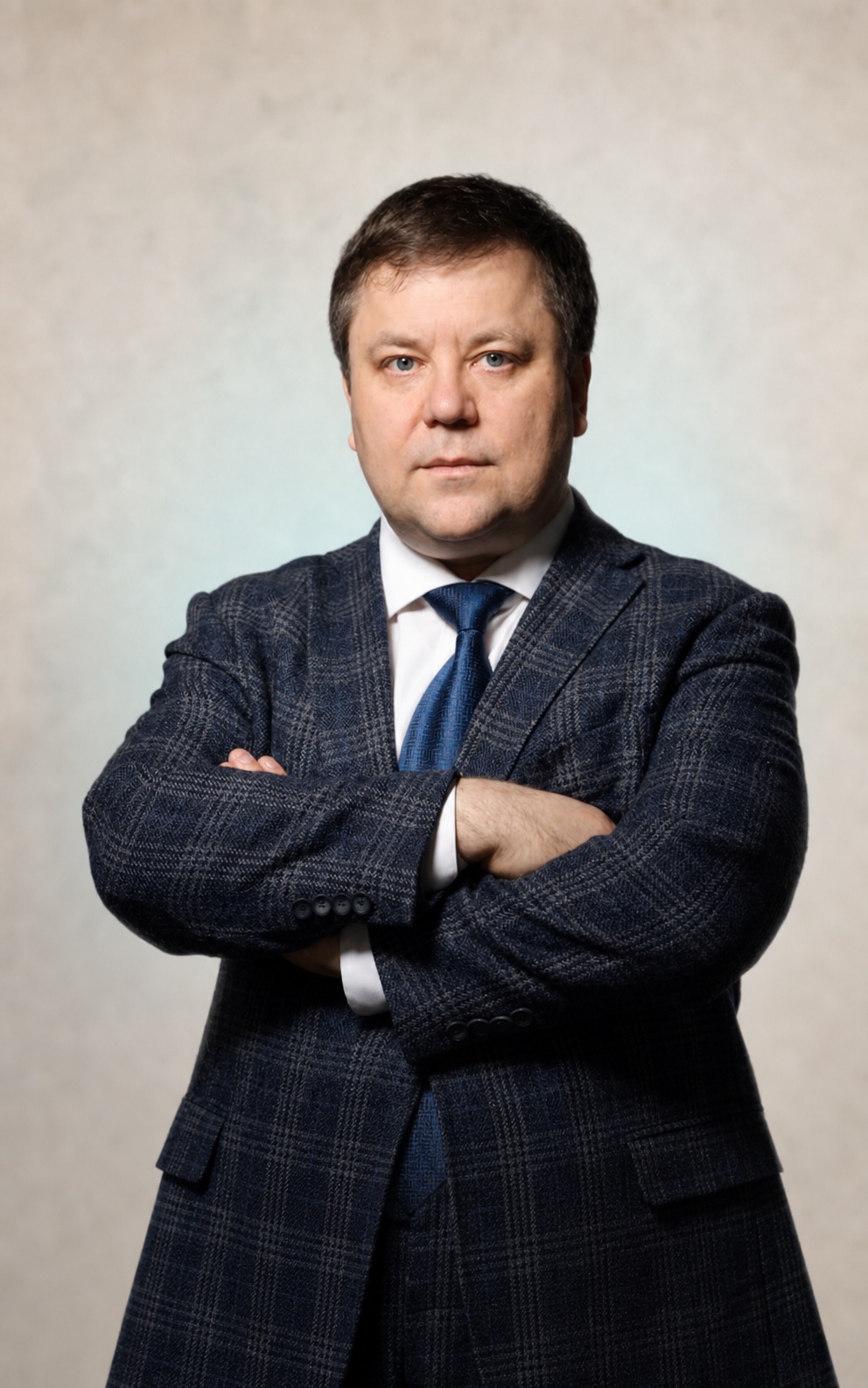
25+ years in regenerative medicine and cellular technologies. The scientific architect of Regentron's core platform — in vivo bioreactor systems, biocomposite cell aggregate engineering, and minimally invasive cell delivery. Candidate of Medical Sciences. Professor at the Russian Academy of Natural Sciences; Senior Researcher at Russia's National Center for Traumatology and Orthopedics. Publications in Tissue Engineering, ACS Omega, and International Journal of Molecular Sciences. Holds 48 personal patents — forming the core of the company's IP portfolio.
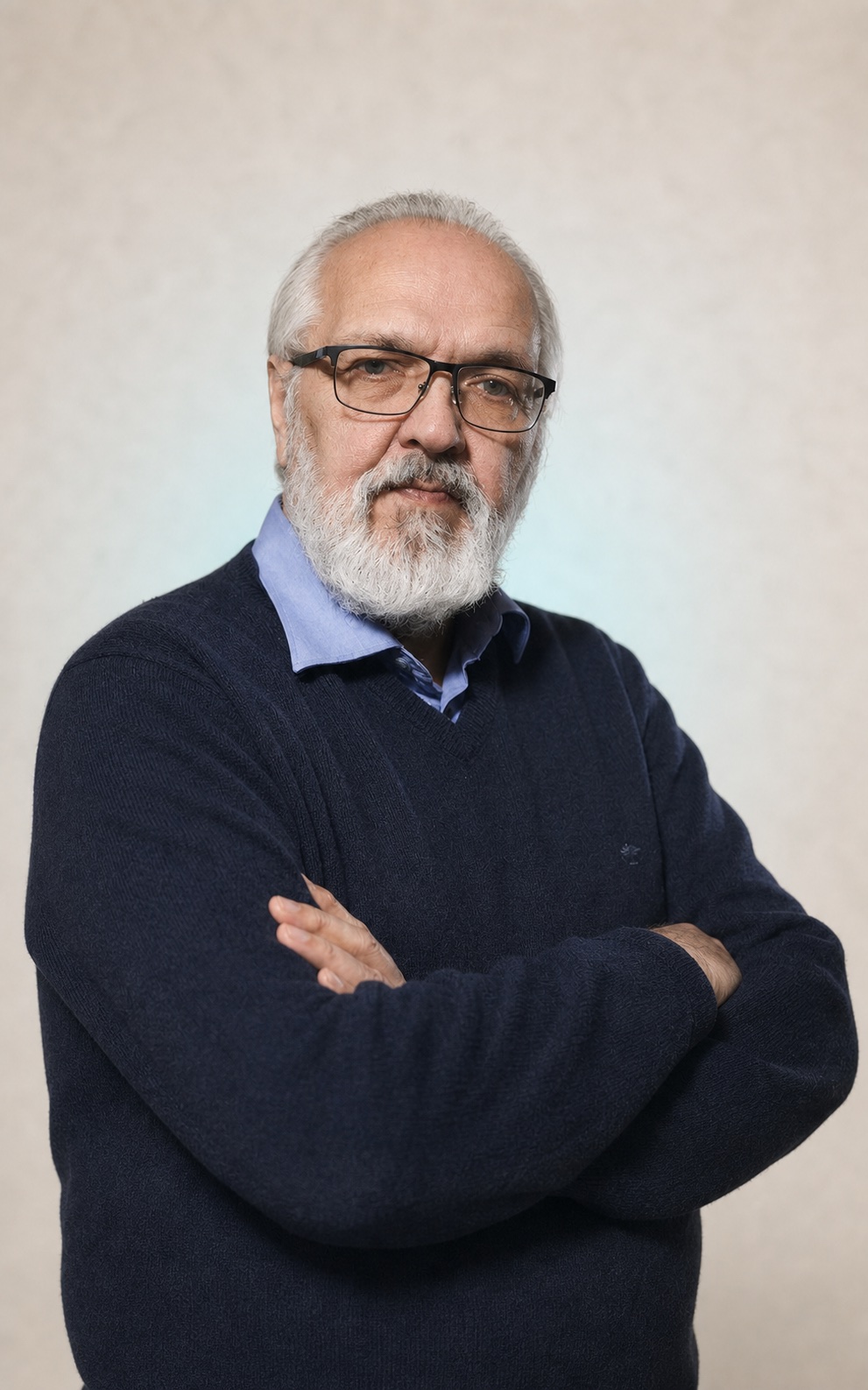
35+ years of experience. One of the founding figures of global 3D bioprinting — co-authored the first scientific publication on organ printing in 2003. Professor at Virginia State University (USA); Scientific Director at 3D Bioprinting Solutions. Led development of the first bioprinted thyroid successfully transplanted into a mouse. Pioneer in magnetic levitational bioassembly and robotic bioprinter development. H-index 52; 200+ peer-reviewed publications.
Research & Publications
A 12-paper publication program targeting Q1 peer-reviewed journals — structured in three waves across the 24-month seed period. Each paper builds institutional credibility, reinforces IP positions, and constitutes the scientific validation package required for Series A.
Our 12-paper publication program is underway. Papers building on the published regulatory framework (Trump & Horgan, Springer 2026) will position Regentron's infrastructure approach as the policy-recommended solution to the Valley of Death problem in regenerative medicine — directly supporting the non-dilutive government funding pathway. Papers will appear here as they are accepted in indexed peer-reviewed journals.